← Home · Underground Excavations

Geotechnical Excavation Monitoring in Hayward, CA

Together, we solve the challenges of tomorrow.

LEARN MORE →

Hayward sits directly atop one of the most active fault segments in the Bay Area. The Hayward Fault creeps steadily, generating surface displacement that complicates any deep cut. Combined with the alluvial clays of the East Bay plain and a perched water table that rises fast after winter storms, excavation here demands constant instrumentation. We deploy inclinometers, piezometers and automated total stations to track ground movement in real time. Because the fault runs right beneath Mission Boulevard, nearby projects must account for lateral strain that standard monitoring plans overlook. Our team integrates seismic refraction surveys to map the soil-bedrock interface before shoring begins, and we cross-check deformation data with deep excavation design assumptions to keep the contractor ahead of any surprises.

Creep along the Hayward Fault adds about 5 millimeters of lateral displacement per year. An excavation near the trace can feel that movement within a single construction season.

Our approach and scope

Conditions shift abruptly between the Burbank benchlands and the flatlands west of Highway 880. Up in the Fairview district, weathered Franciscan Complex bedrock appears within 15 feet of grade and holds a cut well if the shotcrete is applied quickly. Down along Tennyson Road, soft Young Bay Mud extends 40 to 60 feet deep and deforms under even modest surcharge. A single instrumentation layout cannot serve both settings. For the mud sites we specify vibrating-wire piezometers and magnetic extensometers to track pore-pressure dissipation and settlement magnitude. Where the fault trace crosses the excavation, we add crackmeters and automated prism monitoring every two hours, feeding data into a cloud dashboard. On larger commercial digs near Southland Mall, we often pair the monitoring array with a CPT test program to verify undrained shear strength in the clays, confirming that the shoring system's design assumptions hold once excavation reaches full depth.
Geotechnical Excavation Monitoring in Hayward, CA
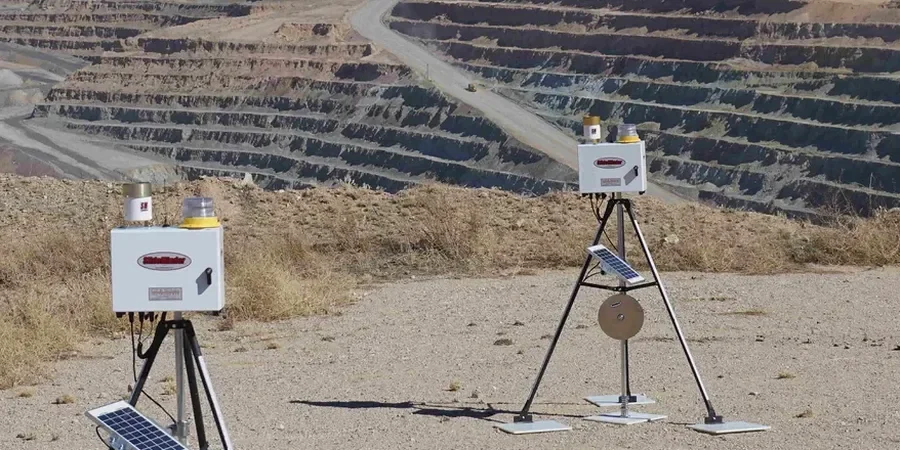
Technical reference image — Hayward

Site-specific factors

Hayward's downtown was rebuilt after the 1868 earthquake, and much of the infill placed since then contains loose sands and debris that compact unpredictably when dewatered. Excavations through this artificial fill have triggered sudden settlement of adjacent sidewalks and utilities. The bigger threat is fault creep: a shoring wall aligned parallel to the fault trace can accumulate bending moment over weeks, not just during a seismic event. Without continuous inclinometer records, the slow rotation looks like instrument drift and gets ignored. We require three-dimensional survey control tied to off-fault benchmarks so that creep-induced translation separates cleanly from thermal or tidal effects. When the project sits within a Caltrans-designated fault zone, we also submit instrumentation reports directly to the city's building division as part of the shoring permit conditions.

Need a geotechnical assessment?

Reply within 24h.

Email: info@geotechnicalengineering1.com

Technical parameters

ParameterTypical value
Inclinometer range±30° from vertical, 0.01 mm/m resolution
Vibrating-wire piezometer0–100 psi, ±0.1% FS accuracy
Automated total station0.5 arc-second, 1 mm + 1 ppm EDM
Crackmeter span50–300 mm, 0.01 mm resolution
Data transmission4G cellular, 15-minute interval push
Reporting frequencyDaily summary with exceedance alerts within 1 hour
Reference standardIBC Chapter 33, Caltrans Trenching & Shoring Manual

Complementary services

01

Real-Time Displacement Monitoring

Automated total stations with prisms on the shoring face, adjacent buildings and utility lines. Data refreshes every 15 minutes with SMS alerts if movement exceeds trigger levels set in the instrumentation plan.

02

Pore-Pressure and Groundwater Tracking

Vibrating-wire piezometers installed in boreholes or push-in ports. We track seasonal perched water and drawdown during dewatering, correlating pressure changes with settlement readings from extensometers.

03

Fault-Creep Instrumentation

Crackmeters across known fault traces, paired with inclinometer casings that penetrate below the creep zone. The combined dataset distinguishes steady tectonic movement from construction-induced deformation.

Applicable standards

IBC 2021 Chapter 33 – Safeguards During Construction, Caltrans Trenching and Shoring Manual (current revision), ASTM D6230 – Standard Practice for Monitoring Earth or Structural Movements Using Inclinometers, OSHA 29 CFR 1926 Subpart P – Excavations

Questions and answers

How much does excavation monitoring cost for a typical Hayward project?

For a single-basement commercial excavation in Hayward, instrument installation and six months of monitoring typically run between US$800 and US$2,220 per month depending on the number of sensors, reading frequency and reporting requirements. Projects that cross the fault trace add crackmeters and more frequent total station rounds, which moves the cost toward the upper end of that range.

When does the City of Hayward require an instrumentation plan for an excavation?

The building division requires a geotechnical instrumentation and monitoring plan for excavations deeper than 10 feet, or shallower cuts that are within 50 feet of the mapped Hayward Fault trace. The plan must specify alarm thresholds, reporting intervals and contingency actions, and it is reviewed as part of the shoring permit package.

What instruments do you install in Bay Mud to confirm shoring performance?

In Young Bay Mud we rely on in-place inclinometers to detect lateral movement behind the wall, vibrating-wire piezometers to track excess pore pressure as the clay consolidates, and settlement plates or magnetic extensometers to measure vertical compression. Together these instruments tell us whether the shoring is controlling deformation or whether the ground is creeping around the wall tips.
Location and service area

We serve projects in Hayward and surrounding areas.

View larger map