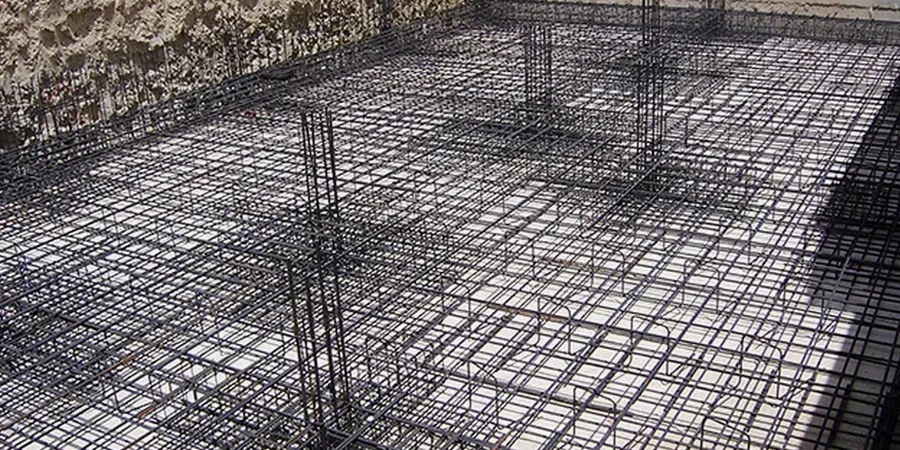
A common mistake in Hayward construction is treating a mat foundation like a simple thickened slab. Contractors pour a uniform 12-inch mat without understanding the differential settlement risk across the Bay Plain’s alluvial fans. We see this most often in the Mission-Foothill corridor, where stiff Pleistocene gravels transition abruptly into compressible younger bay mud over less than 200 feet. A mat foundation in this setting needs strategic stiffening beams and variable reinforcement zones, not a cookie-cutter detail. Our design approach starts with a high-resolution subsurface profile, often built from CPT soundings that map the transition from stiff to soft strata without gaps. When the upper soils contain organics or uncontrolled fill, we specify a vibrocompaction treatment before placing the structural fill, creating a uniform bearing platform beneath the mat. For projects near the Hayward Fault trace, the mat design integrates kinematic soil-structure interaction, not just a static bearing check. The result is a foundation that bridges soft spots and resists seismic racking without requiring deep piles.
A mat foundation on Hayward bay mud isn't a slab — it's a bridge that spans soft spots and resists seismic racking without deep piles.
Questions and answers
How much does a raft/mat foundation design cost in Hayward?
Our design fee for a typical single-family or light commercial mat foundation in Hayward ranges from US$1,170 to US$3,690, depending on the mat footprint area, number of stiffening beams, whether post-tensioning is required, and the complexity of the underlying soil profile. Large custom homes or multi-story mixed-use projects with irregular footprints and liquefaction mitigation requirements fall at the upper end of that range. This fee covers the full design package: subsurface data review, 3D soil-structure interaction model, reinforcement drawings, and a signed, sealed calculation report ready for City of Hayward Building Division submittal.
When is a mat foundation preferred over isolated footings in Hayward?
Mats make sense when the allowable bearing pressure is low (under 2,000 psf) — common in Hayward's bay mud and younger alluvium — or when footings would cover more than 50% of the building footprint. They also excel on sites with high liquefaction potential, where a continuous mat bridges softened zones better than separate footings. In areas east of Mission Boulevard where expansive clay is present, a stiffened mat with perimeter grade beams controls differential heave more reliably than isolated footings with suspended slabs.
Do you handle the City of Hayward permit submittal process?
Yes. Our design package is prepared specifically for the Hayward Building Division's plan check requirements. We provide the geotechnical report, structural calculations for the mat, and the special inspection statement required per IBC Chapter 17. We also coordinate directly with the city's third-party plan check engineers when additional liquefaction or fault-rupture analyses are triggered by the Hayward Fault Alquist-Priolo Zone designation.
What site investigation is needed before designing a mat foundation?
At minimum, we need one CPT sounding or SPT boring per 1,500 square feet of mat footprint, extending to at least twice the mat width in depth. In Hayward's transition zones between alluvial fans and bay plain, we recommend a grid of CPT soundings at 50-foot centers to capture lateral variability. We also need laboratory consolidation and strength tests on undisturbed samples from key strata. If the site is within a liquefaction hazard zone, we add SPT borings for sampling because CPT alone cannot recover soil for cyclic triaxial testing.