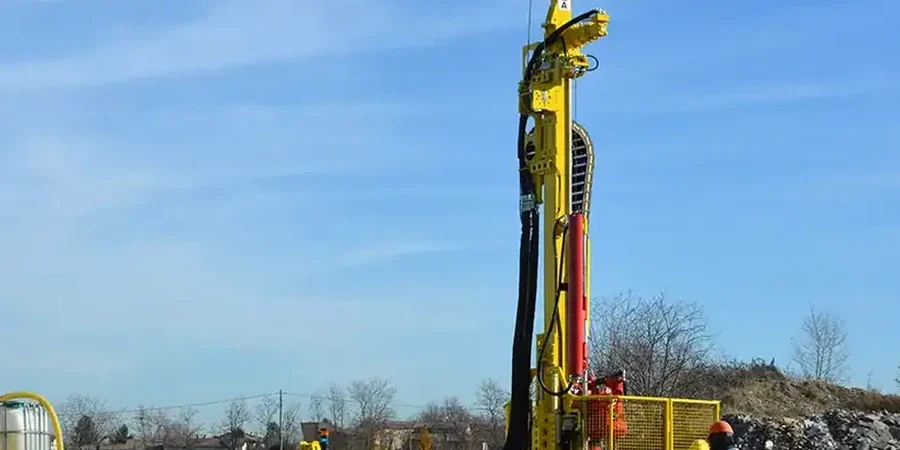
We recently wrapped up an SPT program on a commercial site off Mission Boulevard where the upper 15 feet were pure Bay Mud with sand lenses. The general contractor had assumed stiff clay based on a neighboring lot—big mistake. Hayward sits right on the transition between the flatlands and the East Bay hills, and the subsurface can flip from soft estuarine deposits to dense Franciscan Complex bedrock in less than a hundred yards. Our drill rig logged N-values under 4 in the first two layers, which immediately changed the foundation approach from spread footings to deep driven piles. Before you commit to a structural design anywhere between the Hayward Fault trace and the 880 corridor, an SPT program is your cheapest insurance against nasty surprises during excavation. Combining the SPT data with a CPT test often helps us delineate thin liquefiable seams that the hammer alone might miss, especially near the old San Lorenzo Creek alignments where paleochannels hide compressible organic silts.
In Hayward's alluvial flatlands, the difference between N=4 and N=12 in the first 20 feet can swing your foundation cost by six figures.
Our approach and scope
The most common error we see in Hayward is engineers specifying SPT borehole depths without accounting for the Hayward Fault's influence on bedrock weathering. They stop at 30 feet when the weathered shale zone extends to 45 or 50 feet, leaving the bottom of the pile unsupported. Per ASTM D1586, we run the 140-pound hammer with a 30-inch drop, but local practice matters just as much as the standard—our crew uses a safety hammer with calibrated energy ratios because the stiff clays in the lower alluvium can produce falsely high blow counts with older donut hammers. We log every sample according to ASTM D2487, paying special attention to the transition zone between the alluvial sequence and the underlying Merritt Sand. In hillside lots up toward Garin Regional Park, we often encounter colluvium with scattered boulders that skew refusal criteria, and we adjust the boring plan on the fly to avoid wasting meterage on unrepresentative cobbles.
Questions and answers
What does an SPT test cost in Hayward?
An SPT investigation in Hayward typically runs between US$500 and US$770 per borehole, depending on depth, access conditions, and whether traffic control for road-adjacent sites is required. A full project with multiple holes and a written report will scale from that base rate.
How deep do you typically drill SPT boreholes in Hayward?
For most flatland sites west of Mission Boulevard, we recommend a minimum of 50 feet to capture the full alluvial sequence and assess liquefaction potential. Hillside lots may require less depth if bedrock is encountered sooner, but we always drill at least 10 feet into competent rock to confirm it isn't a boulder.
Can you combine SPT with other tests on the same rig?
Yes. We frequently alternate SPT sampling with CPT soundings or install monitoring wells through the same borehole. This reduces mobilization costs and gives you a more complete picture of the stratigraphy, especially when dealing with Hayward's interbedded clay and sand sequences.
How long until I receive the SPT logs and report?
Field logs are available same-day via email. The final geotechnical report with bearing capacity analysis, liquefaction screening, and foundation recommendations typically takes 5 to 7 business days after the last day of drilling, depending on lab testing complexity.
Do you handle permits and traffic control for Hayward sites?
We coordinate directly with the City of Hayward Public Works for encroachment permits and handle traffic control setup for sites along arterials like Hesperian or Foothill Boulevard. This is included in our scope and pricing.