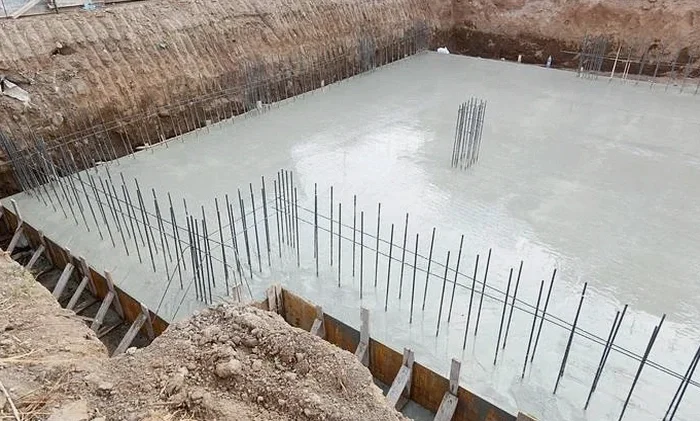
The 2022 California Building Code (Title 24, Part 2), modeled on the IBC, requires a geotechnical investigation for all new structures in Hayward. The city sits squarely on the Hayward Fault, a strike-slip fault with a known creep rate of roughly 5 mm per year. This isn't just a seismic hazard. It directly shapes the soil profile, creating mixed alluvial deposits, artificial fill, and deeply weathered bedrock within short distances. Our team approaches shallow foundation design by first mapping these micro-zones. A generic bearing capacity number won't work here. We integrate fault proximity, soil stiffness, and potential for differential settlement into every footing and mat foundation recommendation. For sites near the BART line or the hills east of Mission Boulevard, the analysis must also account for vibration and slope influence. When subsurface conditions are ambiguous, we correlate our lab data with a CPT test to get a continuous profile of tip resistance and sleeve friction before finalizing the foundation geometry.
On the creeping Hayward Fault, a shallow foundation isn't just supported by soil; it must accommodate continuous ground deformation without brittle fracture.
Our approach and scope
The soil contrast between west Hayward and the hillside neighborhoods is stark. West of the railroad tracks, you encounter soft Bay Mud remnants and loose sandy silts. Here, excessive total settlement often controls the design, not shear failure. East of Mission Boulevard, the challenge shifts to shallow bedrock and expansive clay layers that swell after winter rains. A mat foundation on the west side must distribute loads to minimize differential movement. On the east side, a stiffened slab with deepened perimeter footings might be the answer. Our design process always begins with ASTM D2487 classification of the subgrade. We then run one-dimensional consolidation tests when clay layers are present. The allowable bearing pressure we recommend is not just about safety against collapse. It's about limiting distortion to L/360 for the superstructure. In the flatlands, we also check the influence of a shallow water table, which can rise within 5 feet of the surface in wet years, reducing effective stress beneath the footing.
Questions and answers
How does the Hayward Fault affect shallow foundation design?
The fault introduces two main problems: transient shaking and permanent ground creep. Shaking requires a bearing capacity reduction per ASCE 7-22. Creep, which moves about 5 mm per year, forces us to articulate the foundation or use a thick gravel layer beneath the slab to decouple it from the ground strain.
What is the typical cost range for a shallow foundation design package in Hayward?
For a standard residential or light commercial lot, the geotechnical investigation and design of shallow foundations typically ranges from US$2,040 to US$3,240, depending on the number of borings and lab tests required.
Do I need a mat foundation if my site has clay soil?
Not always. If the clay is stiff and has low plasticity, spread footings work well. We run consolidation tests to measure the compression index. If settlement exceeds 1 inch, we might recommend a mat foundation or over-excavation to reduce the load on the soft layer.
How deep do you drill for a shallow foundation investigation?
We extend the borings to a depth where the stress increase from the footing is less than 10 percent of the existing soil pressure. In Hayward, this is usually 20 to 30 feet below the footing base, unless we hit rock sooner.